
What is Enamel? | Jin Jumbo Custom Metal Gifts
Discover the ancient and exquisite craft of enamel, a technique with over six thousand years of history. This guide delves into the key differences between authentic hard enamel and imitation soft enamel, exploring their unique material properties, production processes, and color characteristics. Learn how the high-temperature firing of real enamel creates its durable, jewel-like finish, and why it's a preferred choice for high-quality, long-lasting items. We also cover the versatility of enamel, which makes it a popular choice for manufacturing a wide range of custom decorative accessories, including medals, pin badges, challenge coins, and keychains, valued for their texture and timeless appeal. Choose Jin Jumbo for high-quality custom metal gifts and reliable OEM ODM manufacturing.
What is Enamel?
Discover the ancient and exquisite craft of enamel, a technique with over six thousand years of history. This guide delves into the key differences between authentic hard enamel and imitation soft enamel, exploring their unique material properties, production processes, and color characteristics. Learn how the high-temperature firing of real enamel creates its durable, jewel-like finish, and why it's a preferred choice for high-quality, long-lasting items. We also cover the versatility of enamel, which makes it a popular choice for manufacturing a wide range of custom decorative accessories, including medals, pin badges, challenge coins, and keychains, valued for their texture and timeless appeal.
The Timeless Art of Enamel Craft
With a rich history spanning over six thousand years, the art of enamel craft originated in ancient times and remains an irreplaceable technique in modern manufacturing. This exquisite process is celebrated for its unique, high-quality texture and a sense of timelessness that is deeply cherished. Enamel's enduring appeal lies in its ability to transform metal items into vibrant, durable works of art.
Distinguishing Real Enamel from Imitation Enamel
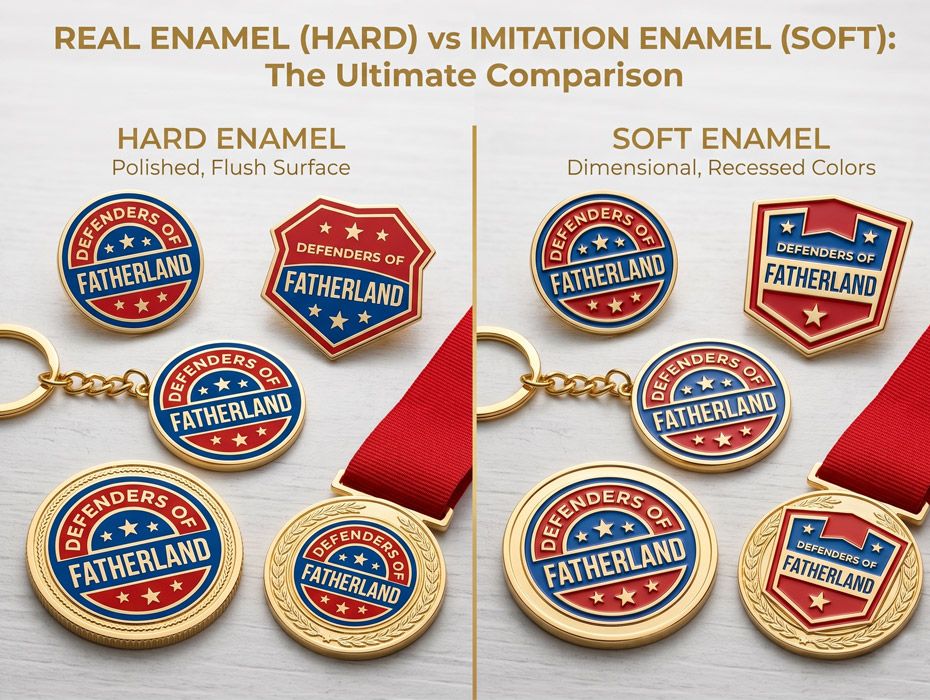
Enamel is broadly categorized into two types: real enamel (hard enamel) and imitation enamel (soft enamel).
- Real Enamel (Hard Enamel): The color of real enamel tends to be darker due to the high-temperature firing process, which causes carbonization of impurities in the copper base. This process may also leave small spots on the back of the metal. The pigments are derived from natural mineral powder, which limits the color palette to specialized international color cards. As a natural product, slight impurities can be present, and the colors are typically less bright than their imitation counterparts.
- Imitation Enamel (Soft Enamel): This type uses artificially matched resin colors, offering a much wider and more flexible range of vibrant hues based on universal color systems. The finish is bright, and the back of the metal remains clean without spotting.
Properties and Applications of Enamel
Enamel serves both decorative and functional purposes, providing a rustproof and exceptionally hard surface. The glaze is baked in a high-temperature kiln, resulting in a metallic luster and hardness that gives it a jewel-like texture and appearance. A key characteristic of real enamel is its extreme durability; it will not change color over time and can be preserved for generations, making it a truly irreplaceable finish.
The enamel process is widely utilized in the manufacturing of various custom products, including:
- Medals and Medallions
- Pin Badges and Lapel Pins
- Challenge Coins
- Keychains
- Various other decorative items and handicrafts


#What is Enamel? | Jin Jumbo
Jin Jumbo develops custom metal gifts, lapel pins, challenge coins, and keychains for global promotional and corporate markets. Backed by over 35 years of precision manufacturing and OEM ODM development support, we help distributors and brands source metal products that combine stable quality, detailed craftsmanship, and dependable commercial value.
Our production structure is built around the needs of promotional product distributors who require reliable supply across multiple categories. From sports medals and police badges to golf accessories and custom tags, Jin Jumbo focuses on manufacturing that improves workflow efficiency, supports strict quality control, and strengthens product value in the metal gifts market.
For international buyers, Jin Jumbo offers more than isolated products. We provide a manufacturing partnership shaped by responsive communication, flexible customization, and long-term production consistency. This helps customers build stronger promotional product lines with dependable sourcing, practical product positioning, and factory-direct quality they can confidently rely on.